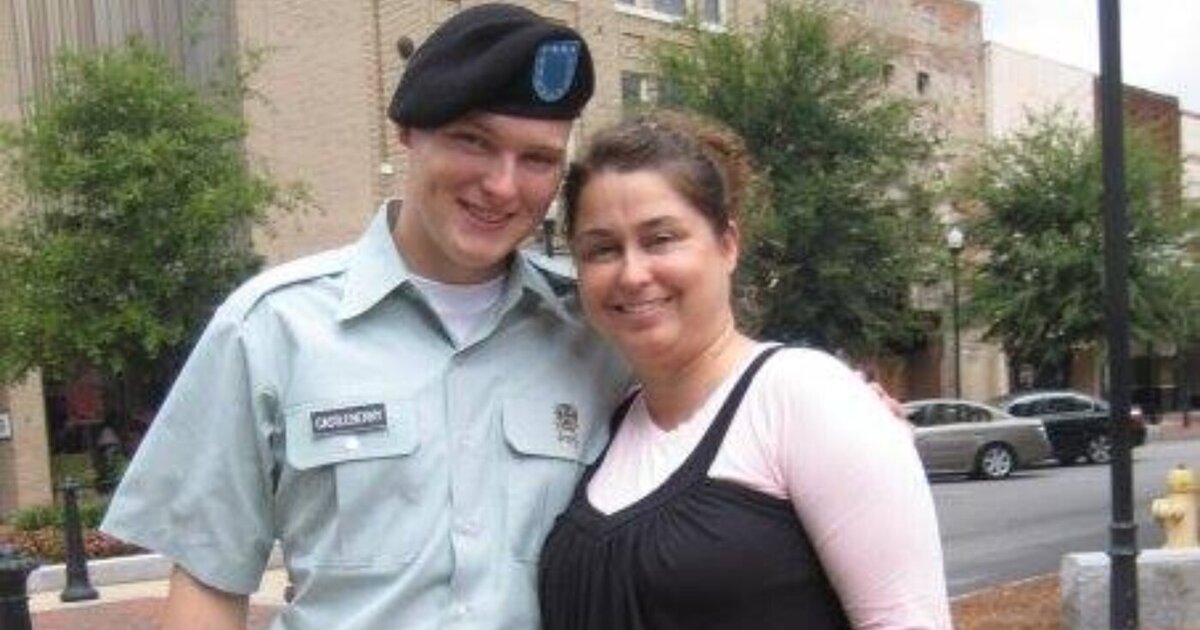
We talk about integrity like it's a decision. Something you either have or you don't, and the people who have it hold the line when pressure shows up. I believed that for a long time. Then I found out what I was made of at eighteen years old in a parking lot in Georgia, and my perspective on integrity would never be the same.
I lost my temper, swung on another soldier, and dislocated my own shoulder doing it. That was seventeen years ago and I still feel that shoulder most days.
Fort Gordon, 2009
I had just graduated high school. I'd done Basic the previous summer and went straight into AIT at Fort Gordon, training as a 25C, a radio operator. In the early weeks of AIT I received my deployment letter, so unlike most of the guys around me I already knew I was going. Everybody in that platoon expected to deploy, but expecting it and holding the letter are two different things. I ended up in Iraq.
I was a PFC, an E-3, and I was the Platoon Guide. That job meant getting the whole platoon to every training destination through the day, on time and accounted for. The cadre tried a few other guys in the role over those weeks and fired every one of them and put me back. At the time I took it as a compliment. Now I think it mostly meant I was the one who wouldn't quit, and an eighteen year old who won't quit is easy to overload.
The heat that summer was the same heat I grew up in. East Texas humidity, the kind that sits down on you and doesn't move, so Georgia didn't surprise me much. The difference was that back home I could always go inside. There, I had no choice but to be in it, and that's most of what I remember about the place. Some of the cadre had recently come back from deployments to Iraq, and I paid extra attention to those men. When somebody who has actually been there tells you how to run a radio or move a formation, it lands with a different weight, because you know you're going to need it. I knew I'd find myself in a wartime scenario before long. That sat on all of us that summer, heavier on some days than others.
There was one soldier in that platoon I could not stand. I honestly can't remember his name, but I remember the feeling of hate I had for him, which probably tells you more about me than about him. He didn't work with anybody. He looked out for himself, ignored the rules, and disregarded whatever the team was trying to do, and the rest of us paid for it. In the Army almost nothing is built to be done alone, so when one man breaks standard the whole formation gets smoked, which is punishment by exercise, usually pushups and situps until the cadre gets tired of it. We ran his tab for weeks. I was boiling by the end of it.
The bus
That day started around five in the morning with breakfast at the DFAC, the chow hall, and then we were supposed to load a bus out to the training grounds. I am not a morning person. That sounds like a throwaway detail and it isn't.
I was stepping up into the bus when I felt a pull on my shoulder from behind. He had grabbed me to hold me back so he could cut in front of me in line.
That's the whole thing. A guy cut in line for a bus. It's so silly. So petty. Maybe it was a move for dominance, I don't know fully, and I've had seventeen years to think it over. What I know is that I snapped. I grabbed his shoulder, turned him around, and swung for his face.
I lost control. We both swung several times and went to the ground, and there were railroad ties bordering that parking lot. My shoulder caught one on the way down and came out of socket on impact. So I had a dislocated shoulder, cut knuckles, and a fire still going in my chest. Friends walked me onto the bus and a few soldiers tried to reset the shoulder right there and couldn't get it. We rode out to the training facility and I stood in formation for the attendance check with a bone sticking out of my shoulder while he stood in that same formation with a bloody face. The cadre could do math. They sent me to the hospital, and that shoulder has given me trouble ever since.
The part I didn't expect
By the time I got back the rumor had gone around that I'd swung so hard my own shoulder came out of socket, and what met me was respect. Everybody in that platoon had assumed somebody would eventually come to blows with this guy. I just never thought it would be me, and now that it had been, I was somebody. I was also fired as Platoon Guide and put on CQ, charge of quarters, which is desk duty, every day for the rest of AIT.
I'd ask younger leaders to look hard at that combination, because it's a trap I've watched swallow people since. The institution punished it and the culture rewarded it. If I had been a slightly different kid I would have walked away from that morning having learned that force works, and I know men who learned exactly that at exactly that age and never unlearned it. I thank God for His mercy on me. My military career could have ended before it started, and instead I was handed a second chance I hadn't earned.
What I found out later
He and I became friends after that fight. Not that week, but eventually, and that's when I learned he had been a foster kid his entire life. No family, ever. He told me himself that any time things started going smooth he would sabotage it. That was his own admission in his own words. He knew he did it and he couldn't stop doing it. He went on to be stationed in Japan and was out of the Army before that year ended, after piling up an extraordinary number of Article 15s.
Set the two of us next to each other. My father was a pastor and my mother stayed home. I grew up in a house with no fear in it and no threat in it. He had none of that for a single day of his life, and I'm the one who threw the punch.
I don't know where he is now. I hope he found people. I hope there's a family somewhere with him in it.
Was it really a character problem?
For a long time I filed this under character. I was wrong to attack him, I should have shown restraint, and I failed. All of that is true and I'm not walking any of it back.
But I've come to think it's the wrong diagnosis, and the difference matters.
What I actually lacked was language. I did not possess the words to address a problem with clarity and civility, so I used my hands instead. And look at the shape I was in. I was tired and short on sleep. I was mentally and emotionally raw from carrying a job for weeks that I wasn't developed enough to carry. I was spiritually immature. I was relationally stupid, with no real idea how to have a hard conversation with a peer. That is four domains running empty at once, in the same eighteen year old, on the same morning.
The punch was a symptom of that. My character didn't collapse in that parking lot so much as it got asked to do something I had no capacity to do, and when everything else in a man's life is overdrawn, character is the account it gets pulled from. That's a good part of why I ended up building an assessment that looks at all seven domains instead of the one making noise. The domain that fails in public is rarely the domain that's actually sick.
That sounds like an excuse
It would be, if I stopped there.
Being that depleted explains what I did. It doesn't excuse it. He got hit in the face, and that was my arm and my choice and my responsibility, and no amount of fatigue moves any part of it onto him. I deserved to lose that position and I'd have deserved worse.
But explanation and excuse are two different tools, and leaders mix them up in both directions all the time. If you look at a capacity problem and call it a resolve problem, you will prescribe the wrong fix every time. Telling a hollowed out leader to go have more integrity accomplishes nothing, because he already agrees with you. Resolve was never the missing piece. You can't grit your way out of an empty tank.
Where this breaks
Some people don't have a capacity problem at all. They have a character problem, and rest will not touch it. Sleep doesn't cure cruelty, and a vacation doesn't fix a man who lies when it's convenient. If "I was tired" becomes a permanent shield, you've found a fairly sophisticated way to never change, and the people around you will work that out long before you do. Part of the job is knowing which one you're looking at, in yourself first and then in the people you lead.
There's a second thing here that sits heavier with me. I was offered one second chance and it corrected me. He was offered many and they were to his own harm. I'm not convinced a second chance is always the merciful thing. Sometimes the consequence is the mercy, and knowing which one to hand a person is among the harder calls in leadership. I haven't mastered it.
What I would change
Not the punch, or not only the punch. The weeks before it.
My real regret is that I never once sat down and talked to that man with sincerity and maturity. I had weeks to do it, and I held a leadership position, which means I had the standing to do it. Instead I let contempt build until it had somewhere to go.
He was a disruptive, selfish soldier who broke every rule he could find. He was also a kid who had been handed back his whole life and had learned to blow up anything good before it could leave him, and I met that with rage. In the most literal way available to me I confirmed for him that the world eventually hits you. I failed him as a leader and I perpetuated his paradigm of defense and his posture of fear.
If you're leading anybody right now, the piece of this worth keeping is that the person disrupting your team is usually protecting something. You are not required to tolerate the behavior. The Army didn't and shouldn't have. But you get to decide whether the correction comes out of curiosity or out of contempt, and you make that decision weeks ahead of the incident rather than during it. I made mine wrong, and I made it running on four empty tanks.
Where do you stand?
If you're leading people and you've got a temper you're managing, or somebody on your team you've quietly started to hate, I'd ask you one question before you do anything about them. Which of your domains is empty? Physical, mental, relational, social, spiritual, financial, professional. Something is wearing on you and it is going to find an exit somewhere. Mine found one at five in the morning in a parking lot at Fort Gordon, and it cost me a shoulder I'm still paying for.
Take the free Leader's Health Check. It's fifteen minutes and it's confidential. Find out which tank is running low before something else does.
And if you're the man I fought that morning, I'm sorry. Not for the consequence, I earned that. For the weeks before it, when I could have just talked to you.
Get the next post by email
New essays on whole-life leadership, plus first word on events and cohorts. Unsubscribe any time.
Where do you stand across all 7 domains?
The Leader's Health Check is free, confidential, and takes about 15 minutes.
Take the Free Assessment →