If I had to name the most common complaint I hear from struggling leaders, it would be about money. "I need more money." "I don't get paid enough." "Our budget for this project is too low."
I understand the feeling. I've lived it. But after years of operating businesses on little or no budget, I've come to believe that this is almost always a misdiagnosis. Money doesn't fix the issue, because the issue is usually rooted somewhere else. And more often than not, it's rooted in a domain of life the leader stopped investing in a long time ago.
Let me tell you about Jerry.
The park and the lineman
When I was young and dumb, I purchased a small mobile home park in East Texas. It was rough. Low-income renters. I owned and maintained all the homes myself. I collected the rent, did the repairs, moved in the refrigerators. I had just enough money to buy the park, and from that day forward it had to feed itself. My day job didn't pay enough to contribute a dime. Everything the park produced went back into the park.
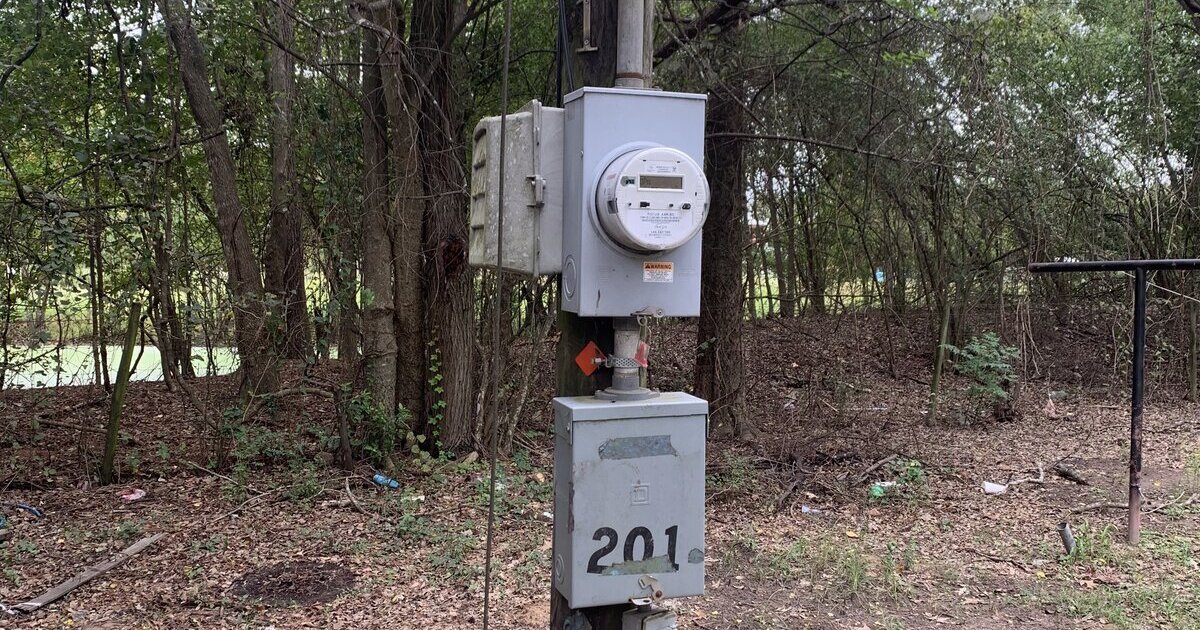
One day I needed to build a new RV site for an incoming tenant, and that meant electrical work. I had never worked with electrical. I barely knew the difference between AC and DC. But I was committed, my motives were right, and I figured one way or another I'd work it out.
That same day, on the road to the park, I met a man named Jerry. We got to talking and became quick friends. I wasn't working an angle. I was genuinely interested in his life, so I asked questions. It turned out Jerry was a lineman who traveled for work, and that day he happened to have time on his hands. I started asking him how to mount a breaker box for the RV site. Maybe he pitied me. Probably he did. But I had already bought all the materials, and Jerry ended up pulling his truck in and doing the job himself.
I had cash on me from collecting rent that morning. I insisted on paying him. He refused. Jerry would not take my money.
I later learned he lived a quarter mile from the park. He went on to help me through many more projects, and I helped him with his boat motor, his truck, whatever needed fixing. Jerry became a great friend. He died unexpectedly of a heart attack just a few years later, and I will forever be indebted to him. His generosity was unmatched.
I'd like to tell you that story proves my ability to build relationships. But if I'm honest, it was Jerry who held the greatest equity in that friendship. What the story really proves is this: your openness to relationship becomes your greatest asset, and it will far exceed your financial balance.
The question behind the question
When you're faced with a challenge, where do you go first? To the wallet, or to the network of people you've invested in for years?
I'm not talking about "you owe me" relationships, where attention and expertise are extracted like debts. I'm talking about solid, organic relationships that exist outside the transaction of money. Business runs on real relationships, not tit for tat. I have found that I can almost always make up for a deficient bank account with an overabundance of relational supply, stockpiled over years of genuine investment.
The leader who says "I need more money" often has a different deficiency entirely. The budget is just where it surfaced.
What about motive?
Here's the objection: "So you build relationships in order to use them later? That's just networking with extra steps."
Fair question. Some people do treat relationships as a means to an end, and it shows. My answer comes from my faith. I choose to love my neighbor without expectation of return. The Lord knows how many times I have given of myself with no direct payback, but I also believe He keeps a record of it all and has a supernatural way of bestowing favor along the way.
The relationship investment is not a 1:1 return. Sometimes it's less. Sometimes it's more. But over a lifetime, it always trends upward. If your motive is extraction, people feel it and the account never fills. If your motive is love, you'll find you've been storing up help you never knew you'd need.
Where this breaks
None of this excuses financial irresponsibility. We can't claim naivety with money while buddying up to every wealthy person or skilled laborer on the street. Ethical financial management is still our job. Sometimes "I need more money" is the correct diagnosis, and the discipline is knowing the difference.
But here's the test I'd offer: before you conclude that your problem is financial, ask whether it's actually relational, or spiritual, or physical, or mental. Not every challenge is a financial one. In my experience, most aren't.
The bigger picture
This is really a story about whole-life health. Money is one domain out of seven. So are your relationships, your social network, your spiritual life, your body, your mind, and your work. A deficiency in one domain can often be covered by strength in another, and that's exactly why leaders need to know where they actually stand across all seven, not just the one that's making noise this month.
Jerry covered my electrical problem because a relationship existed before the need did. That's the principle: invest before the emergency.
Take the free Leader's Health Check and find out which of your seven domains is running a surplus, and which one you've been draining.
Get the next post by email
New essays on whole-life leadership, plus first word on events and cohorts. Unsubscribe any time.
Where do you stand across all 7 domains?
The Leader's Health Check is free, confidential, and takes about 15 minutes.
Take the Free Assessment →